
 Login
Login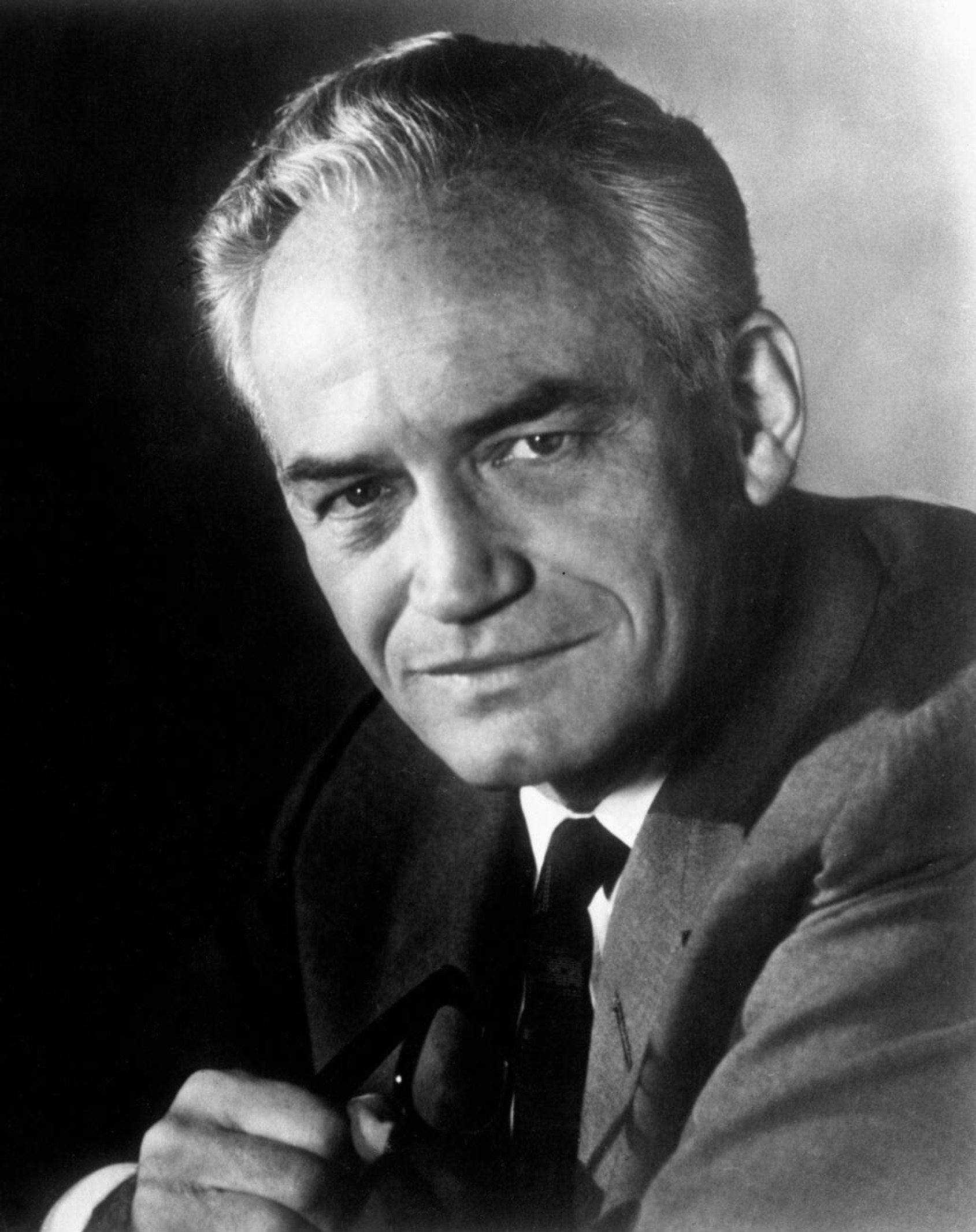
Barry M. Goldwater (1909–1998) served Arizona for 30 years in the United States Senate, retired as a major general in the U.S. Air Force Reserves, and spent a lifetime immersed in the science and technology of his era — as a radio pioneer, aviator, photographer, and champion of American innovation. The scholarship that bears his name reflects the qualities he prized most: curiosity, technical skill, self-reliance, and service to country.
A life in numbers
his age when he built Arizona’s first commercial radio transmitter
flight hours logged over a 37-year military career
types of aircraft flown
years representing Arizona in the U.S. Senate
An early fascination with technology
Goldwater was born in Phoenix on January 1, 1909, three years before Arizona became a state. At 13, he built the first commercial radio transmitter in Arizona — call sign KFDA, only the 36th licensed station in the United States — beginning a lifelong devotion to amateur radio and electronics. He attended Staunton Military Academy in Virginia, where he excelled as a cadet and athlete, and enrolled at the University of Arizona, leaving in 1929 after his father’s death to join the family business. At Goldwater’s Department Store he rose from junior clerk to president and, later, chairman of the board.
Aviator and airman
Flying was Goldwater’s great technical passion. Initially rejected for pilot duty in 1942 because of his age and old athletic injuries, he persisted, became a gunnery instructor in Yuma, Arizona — where he perfected a technique that measurably improved target accuracy — and was one of ten pilots who ferried P-47 Thunderbolts across the North Atlantic to Europe during the Second World War. Over a 37-year military career he logged 15,000 hours of flight time in over 250 types of aircraft, retiring as a major general in the U.S. Air Force Reserves.
Explorer and photographer
In 1940 Goldwater joined Norman Nevills’ 42-day expedition down the Green and Colorado Rivers, becoming just the 71st person known to have traveled from the Colorado’s headwaters to Lake Mead. His photographs of Arizona’s landscapes and Native peoples earned him international exhibitions and membership in the Royal Photographic Society. His film, slides and lecture Shooting the Rapids toured venues across Arizona and drew large audiences, building the public profile he would later run on.
Public service
Goldwater entered public life in 1949 on a municipal reform platform, winning a seat on the Phoenix City Council. In 1952 he unseated the incumbent Ernest McFarland to win a seat in the United States Senate, where he served five terms across more than three decades, choosing not to seek re-election in 1986. He was the Republican Party’s nominee for President in 1964, losing to Lyndon Johnson; though defeated, he emerged as a political icon for the conservative movement and one of the most influential political figures of the twentieth century. In the Senate, he devoted himself to the institutions and issues he knew firsthand — serving on the Armed Services, Intelligence, Indian Affairs, and Commerce, Science, and Transportation Committees, and remaining a steady advocate for aviation, technology, national defense, and Native American communities.
A legacy of investing in scientific excellence
When Goldwater retired from the Senate in 1986, Congress honored him with a tribute suited to a man who had spent his life around radios, aircraft, and cameras: a permanent, merit-based scholarship program for the country’s most promising young scientists, engineers, and mathematicians. Goldwater believed deeply that America’s strength depended on its technical and scientific excellence. Every Goldwater Scholar named since 1989 — more than 11,600 of them — is part of that legacy.
Senator Goldwater died at his home in Arizona, on May 29, 1998. His ashes were scattered along the Colorado River in the Grand Canyon — the river he had run more than half a century before.